
By Andrea Haffner, Licensed Marriage and Family Therapist, Senior Clinical Advisor at Secure Beginnings/Comienzos Seguros
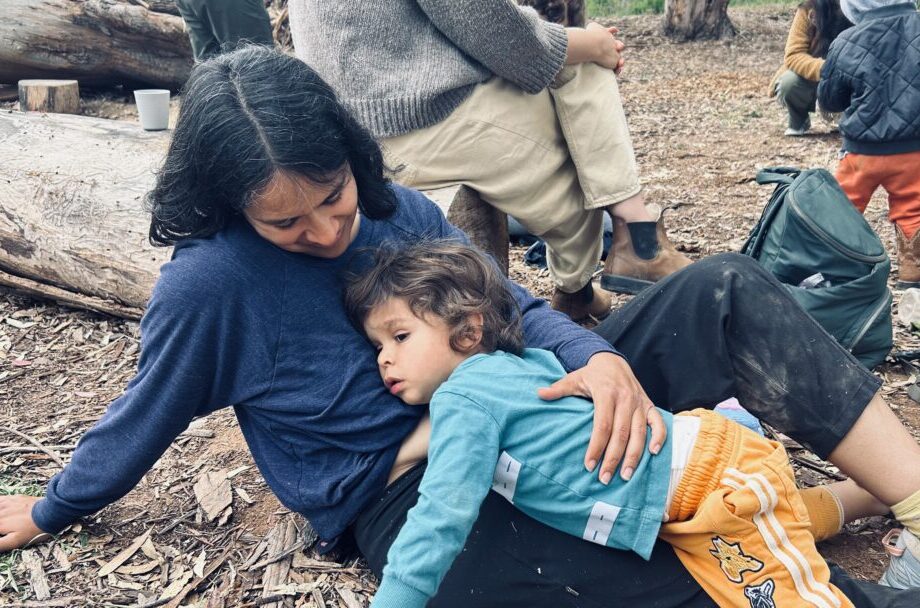
As we recognize Maternal Mental Health Awareness Week, it is a good time to reflect on the essential value of human connection. Connection helps us to know that we are not alone, that others understand us and have walked similar roads, or else that they sincerely wish to understand the particular roads that we are walking. Connection can be healing.
While caring for a baby or young child can be profoundly rewarding, it can also sometimes feel isolating. When struggles arise, this sense of isolation can become magnified. Mothers of young children who are suffering from depression, anxiety, or other challenges coping with daily life may experience powerful feelings of self-judgment, guilt, or shame. They may feel that they are failing as parents, and may compare themselves to others who they imagine are thriving while they are barely treading water. We know that depression and anxiety can change one’s perceptions and perspectives, making it difficult to see clearly. Given all of these factors it can be hard for struggling parents to reach out for support.
While mothers may feel alone in their struggles, in actuality we know that such challenges are incredibly common. When we consider that baby blues impact up to 80% of new mothers, and that one in five mothers experience anxiety, depression, or other mental health disorders (1), we can see that the struggles that many mothers experience are absolutely normal. Research shows that supportive connection can play both protective and alleviating roles for those dealing with maternal mental health challenges (2, 3).
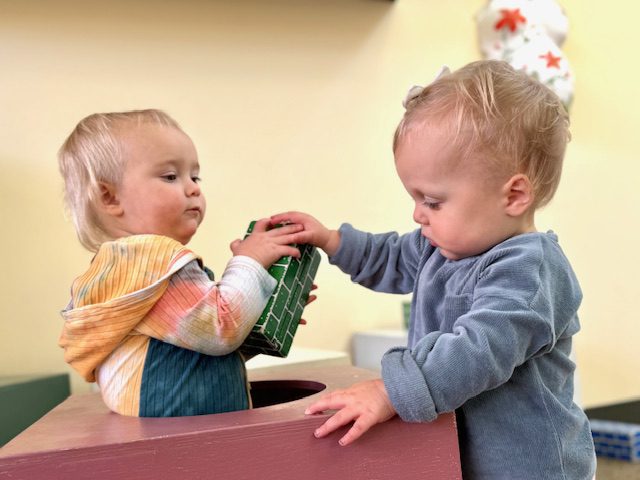
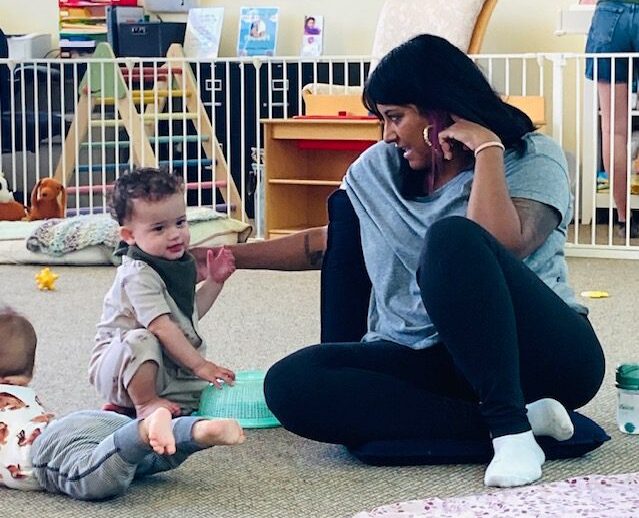
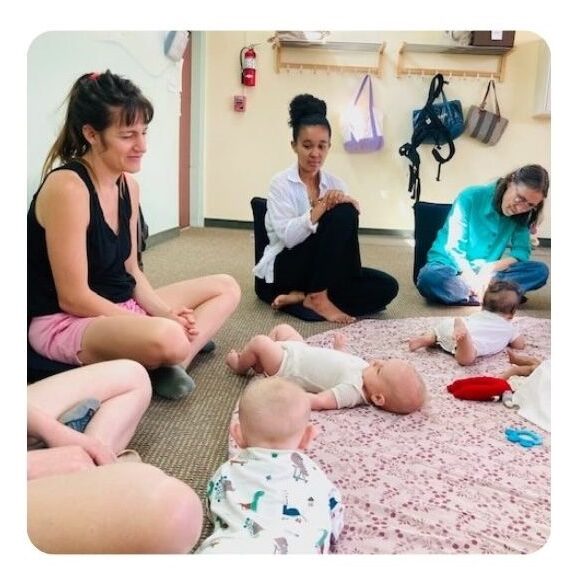
Connection can take many forms. Social support and connection may come from trusted friends or family. Social support can also be found in organized groups of fellow parents in which participants can share experiences, fears, hopes, and struggles. At Secure Beginnings, our in-person Parent-Child Classes, as well as our Abriendo Puertas classes for Spanish speaking parents, offer opportunities to hear, share, and learn from one another in a safe and non-judgmental environment. In the company of other parents and children, discussing areas of common concern such as sleep or the identity changes that come with new parenthood, parents can find resonance, acceptance, and mutual understanding with one another. Many group participants share that feeling less alone in their family’s journey has been immensely helpful as they navigate the inevitable challenges and changes that life with children brings.
When struggles become especially hard or overwhelming, it can be helpful to connect with one-on-one support. Secure Beginning’s Counseling Program is available to all parents of children ages 0-5 to help you find the type of support that might be helpful, from connecting with specialized resources to finding a trusted therapist who specializes in the area that would be helpful. Sometimes someone who is struggling doesn’t know exactly what they need, and that’s ok too. We are here to listen and offer ideas and resources in determining what kind of support might be helpful.
Supportive connection helps our emotional loads feel lighter. When we feel less weighed down by our struggles we experience greater well-being, and have greater capacity to connect with and care for those who depend on us. Sometimes reaching out can be hard (in fact it may be the hardest step), but doing so can bring great comfort and relief. I hope that this Maternal Mental Health Awareness Week can inspire us all to check in and connect with the mothers in our lives, whether they are our loved ones or ourselves, so that we all know that we are not alone.
- Maternal Mental Health Leadership Alliance Inc. (2026, March 7). Maternal Mental Health Conditions and Statistics: An Overview. Maternal Mental Health Leadership Alliance. https://www.mmhla.org/articles/maternal-mental-health-conditions-and-statistics
- Laura M. Schwab-Reese, Ellen J. Schafer & Sato Ashida (2017). Associations of social support and stress with postpartum maternal mental health symptoms: Main effects, moderation, and mediation, Women & Health, 57:6, 723-740, DOI:10.1080/03630242.2016.1181140
- Emily Feinberg, Eugene Declercq, Annette Lee, Candice Belanoff (2022). The Relationship between Social Support and Postnatal Anxiety and Depression: Results from the Listening to Mothers in California Survey, Women’s Health Issues, Volume 32, Issue 3, Pages 251-260, ISSN 1049-3867, https://doi.org/10.1016/j.whi.2022.01.005. (https://www.sciencedirect.com/science/article/pii/S1049386722000056)